
Why Talking Isn’t Always Enough: How Trauma Lives Beyond Logic in Relationships
You come home after a long day, just like any other day, expecting the comforting connection with your partner. Instead, today your partner lets you know they’ve had a long day too. They say they need some time alone to decompress, and they close the door on their way to the shower after a brief hug. Nothing is wrong. No argument, no rejection. Your partner’s voice is neutral, calm, honest. But even as you logically recognize the neutrality of the situation, your body reacts. You can feel your chest tighten as your mind scans the past few minutes, this morning, even the last couple of days for what you could have done wrong, what your partner might be upset about. A fear of disconnection settles in, and you need to get into that bathroom; you need to connect with your partner. You need to know you didn’t do anything wrong, that they still love you.
Even when the present moment is safe, and you logically know it, past traumatic experiences that left you feeling isolated, afraid, or like you couldn’t predict the actions and intentions of others you trusted can live on in your nervous system, where they are frustratingly disconnected from logical thought. This is how trauma often shows up in relationships: beyond logic, and in ordinary moments where safety with yourself and those you love feels elusive.

Insight can be powerful. Understanding why you react the way you do in relationships can feel relieving, even validating. This is an important first step to find clarity in the example above and to help yourself not barge into that bathroom, as stressful and scary as it feels. However, no matter how much insight you develop, you might notice that the same patterns keep showing up: the same activation when your partner needs distance, the same sense of freeze in your body when your partner touches you unexpectedly, or the same quick burst of anger that you know wasn’t warranted.
You still shut down when conflict arises. You still feel flooded with emotion when someone pulls away. You still want closeness but panic when it actually happens.
It’s hard not to feel frustration with yourself and hopelessness for your future when you’ve put so much work in and built understanding, yet little has changed in action. “I know better, so why can’t I do better?”
You can’t do better just because you know better. Trauma isn’t logical. It isn’t stored in facts or words. Trauma is stored in the body and the brain. When trauma is stored in the body, it shapes your reactions and responses long before conscious thought has a chance to intervene. This is where the talk therapy limitations many people experience begin to make sense, and where trauma-informed treatment approaches like EMDR therapy can offer something different.
Trauma Is Stored in the Body and the Brain
A traumatic past experience is not just a memory you can think your way out of. It is trauma stored in the body, embedded in the nervous system and the parts of the brain responsible for survival.
Under ordinary circumstances, memories are processed by the hippocampus, the part of the brain that organizes experiences into a coherent narrative and places them in historical time. This is what allows you to say, “That happened back then, and it’s over now.”
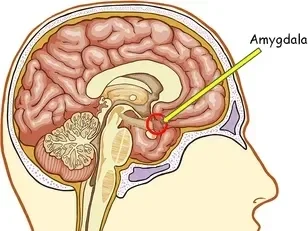
image from: https://brainmadesimple.com/amygdala/
Trauma overwhelms this system.
When an experience feels threatening or unbearable, the brain prioritizes survival. The amygdala, the brain’s alarm center, takes over. Its role is not logic or language, it’s protection.
As a result:
Traumatic experiences are stored as sensations, emotions, images, and physiological reactions
Trauma stored in the body can feel disconnected from time, as if it is still happening when it comes to mind in the present
The nervous system remains primed for danger, even in objectively safe situations
This is why trauma stored in the body doesn’t respond well to reasoning alone. You cannot logic your way out of a response that is happening at a physiological level.
What Happens During a Trauma Response
When trauma stored in the body is activated, the nervous system automatically shifts into fight, flight, freeze, or fawn. Blood flow moves away from the prefrontal cortex, responsible for decision-making, reflection, and impulse control, toward survival centers responsible for keeping you alive.
In these moments, logical thinking literally shuts down.
This can look like:
Feeling suddenly overwhelmed, panicked, or numb
Struggling to find words or explain what’s happening inside
Reacting in ways that feel confusing or out of character
Feeling disconnected even when you know your partner has every right to take a shower in peace, but still feeling the need to intervene
To survive these states, your system adapts. Trauma stored in the body leads to coping strategies that once helped you feel safer:
Avoiding emotional closeness
Becoming controlling or hypervigilant
Attacking or pushing others away before they can hurt you
Shutting down or dissociating
Oversharing, people-pleasing, or fawning
These responses are not flaws, they are adaptations designed to help you get your needs met. Even when they no longer serve you, they are evidence of a nervous system that learned how to survive.
How Trauma Stored in the Body Affects Relationships
Relationships are one of the most common places trauma stored in the body shows up. Connection requires vulnerability, emotional exposure, and dependence—exactly the conditions that can feel unsafe to a traumatized nervous system.
Relationship trauma responses can develop from many experiences, including:
Past relationship trauma
Attachment trauma or emotional neglect
Sexual trauma, including rape or sexual assault
Chronic invalidation, abandonment, or betrayal
While sexual trauma understandably affects relationships and intimacy, any form of trauma stored in the body can impact relationships. Vulnerability itself involves risk, and for someone with trauma, risk can register as danger.
This often leads to:
Difficulty trusting others or yourself
Wanting connection but feeling panicked when it appears or desperately afraid of losing it
Strong reactions to seemingly small triggers
Patterns of isolating, clinging, oversharing, or withdrawing
Even when triggers don’t make sense to you, the body is responding to perceived threat based on past experiences. This is why relationship trauma responses can feel automatic and hard to control.

Why Insight Alone Often Isn’t Enough
Traditional talk therapy can be incredibly helpful for insight, meaning-making, and emotional validation. For many people, it is an essential part of healing, and it’s an important step in healing from trauma.
But when trauma is stored in the body, there may be limitations to talk therapy alone.
You may notice:
You understand your trauma intellectually, but your reactions don’t change
You can explain your triggers, yet still feel hijacked by them
You talk about emotions rather than being able to move through them
This is not because you’re resistant or failing at therapy. Trauma lives in parts of the brain that are not accessed through language alone. This is where trauma-informed care becomes a very helpful next step.
Trauma-Informed Approaches That Address Trauma Stored in the Body
Trauma-informed therapy recognizes that healing must involve the nervous system, not just cognition. It prioritizes safety, pacing, and working with the trauma stored in the body rather than trying to override it.
Trauma-Informed EMDR Therapy
Trauma-informed EMDR therapy (Eye Movement Desensitization and Reprocessing) is one of the most well-researched treatments for trauma.
EMDR works by helping the brain reprocess traumatic memories so they can move out of the amygdala and into more adaptive memory networks. The trauma moves from the amygdala to the hippocampus. It remains a memory that you have, but becomes less distressing and overwhelming when you recall it. The nervous system stops reacting to the memory as if you are in danger in the present, allowing you to stay regulated and grounded.
With trauma-informed EMDR therapy, many people experience:
Reduced emotional intensity around triggers
Fewer physiological reactions
A nervous system that no longer reacts as if the trauma is still happening
For relationship trauma responses, EMDR can be especially powerful because it targets the roots of attachment and relational pain without relying solely on talking.
Trauma-Informed Talk Therapy
Talk therapy still plays an important role, particularly when delivered by a trauma-informed therapist.
A trauma therapist understands:
How trauma stored in the body shows up in relationships
When to slow down instead of pushing insight
How to help clients stay regulated while exploring painful material
Rather than trying to push change through logic, trauma-informed talk therapy supports the nervous system in learning safety while gently increasing emotional tolerance. Logic is used to support the discomfort that can accompany increasing emotional tolerance in new situations, only with the support of regulating your nervous system.
Somatic and Grounding Work
Somatic approaches are specifically designed to work with trauma stored in the body. These practices help you build awareness of internal sensations and nervous system states.
This may include:
Tracking physical sensations
Learning grounding and orienting skills
Practicing regulation before processing memories
Over time, these tools teach your body that activation does not equal danger, which is a key shift in healing relationship trauma responses.
What Real Healing Looks Like
The healing process for trauma stored in the body isn’t quick or linear. Triggers won’t disappear overnight and sometimes may even intensify before improving. When you’ve built awareness of triggers and understand what they are and where they’re coming from, it can become more frustrating to not see immediate change. For some time into your healing process, those triggers will still be present.
The change happens in your relationship to those triggers:
You begin to notice activation as it’s happening
You can pause instead of reacting automatically
You know how to care for yourself through overwhelm
As trauma stored in the body becomes less intense, many people find they can:
Stay present during difficult conversations
Name needs instead of shutting down
Be vulnerable while trusting their capacity to cope with discomfort
Healing is not about never being activated again. It’s about knowing you can survive and navigate what comes up. Over time, the trust that builds in yourself will help you feel more confident, which in turn diminishes the intensity and meaning of triggering experiences.
How Healing Trauma Stored in the Body Improves Relationships
As your nervous system becomes more regulated, trust begins to grow, at first with yourself, and then in others.
When relationship trauma responses soften, you may notice:
Less reactivity during conflict
Greater emotional intimacy
An increased sense of safety in connection
An ability to think more rationally in highly emotional situations
Rather than relying on logic to override survival responses, your body learns through experience that closeness can be safe.

If you’ve ever felt discouraged because talking hasn’t been enough, you may be storing trauma in your body and need more trauma informed care to help you progress to the next step.
Trauma stored in the body requires approaches that meet it where it is. Trauma-informed EMDR therapy, somatic work, and trauma-informed talk therapy do not replace insight. They expand it.
When the body learns safety, logic no longer has to work so hard, and you won’t feel so frustrated by the disconnect between your logic and reaction. Relationships no longer have to feel like a constant battle between what you know and what you feel.
If you’re in Colorado and ready to explore trauma-informed treatment approaches that go beyond talk therapy, reach out today to see if we’re a good fit and schedule a free consultation.