
The Emotions Behind the Habit: Understanding Why We Drink
Nobody starts drinking with the goal of building a complicated or painful relationship with alcohol.
In the beginning, it often feels simple. Social. Celebratory. Or something that helps take the edge off after a long day. It looks like a drink with friends after work, a glass of wine while making dinner, or a beer to help you unwind on the weekend.
And for a while, it probably works. But over time, drinking can shift from something you do occasionally to something more emotionally anchored. Something you come to rely on.
You might start to notice it showing up in specific moments:
After a stressful day
When your mind won’t stop racing
When you feel lonely, bored, or disconnected
When something feels off, but you can’t quite name it

It’s not always obvious when that shift happens. For many people, it’s subtle enough that they don’t fully notice the habit building until they find themselves wondering:
Why do I feel like I need this right now?
Would it be hard not to drink tonight?
Judging that pattern is rarely helpful, but slowing down enough to understand it can be. When you can pause and reflect on the emotional role that alcohol is playing in your life, you have more choice in how you respond, and you don’t have to stay stuck in a pattern if it isn’t feeling good anymore.
Drinking to Cope With Stress: When Relief Becomes a Pattern
A common reason people reach for a drink, and a pathway into a more emotionally driven relationship with alcohol, is drinking to cope with stress. Stress doesn’t have to be extreme for this pattern to develop. Often, it’s not one major life event like a divorce or caring for a sick parent, but the accumulation of smaller, ongoing stressors.
You’re exhausted from everything compounding throughout the day:
A full workday
Constant decision-making
Relationship tension
Mental load that never fully shuts off
When you finally sit down at the end of the day, your body is tired, but your mind is still going. It’s hard to put down the mental to-do list, to shut off your brain. There’s a restlessness, a tightness, a feeling that you can’t fully exhale yet.
And a drink offers something very immediate in this moment:
A shift. A boundary into relaxation. A way to feel different quickly.
What a relief.
Your brain is wired to remember what brings relief. So if alcohol consistently reduces that internal pressure—even temporarily—your nervous system begins to associate it with feeling better.
Alcohol is a central nervous system depressant, which means it slows activity in the brain and body. In the short term, it can increase feelings of relaxation, lower inhibitions, and create a sense of ease. These effects are reinforced by changes in brain chemistry, which is part of why it can feel so effective in the moment.
Over time, this is how alcohol can become the coping tool you reach for most automatically. It works quickly, and your brain remembers that. Often more immediately than options like journaling, going for a walk, or sitting with the feeling.
And this is the part people often misunderstand. It’s not about willpower. It’s about the learned connection between feeling overwhelmed and finding fast relief.
In many cases, the question isn’t just “why am I drinking so much?” It’s “what hasn’t yet been built that could support me in these moments instead?”
The Emotional Roots: Anxiety, Sadness, and Overwhelm
Although drinking can start to feel chaotic or out of control when it increases beyond what you want, it often follows a pattern. When you look more closely at when you drink, you may begin to notice that it isn’t random. Reaching for alcohol often shows up around specific emotional states.
Anxiety is one of the most common.
That restless, future-focused thinking. The overanalyzing. The feeling that your brain won’t turn off. Alcohol can temporarily quiet that internal noise, which makes it reinforcing.
If this is something you notice in other areas of your life, especially in relationships, you might relate to patterns explored here.
Sadness can be another.
Not always depression, but a heaviness, disconnection, or a sense that something feels off internally. A drink can take the edge off just enough to avoid sitting fully in that feeling.
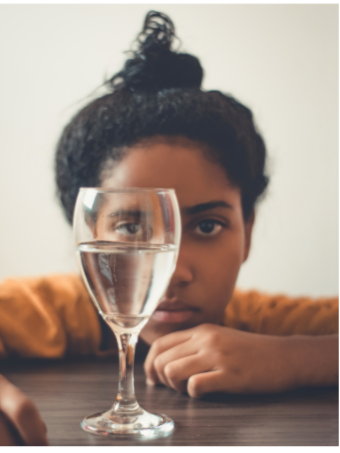
Boredom plays a role, too.
Those quiet moments, especially in the evening, when there’s nothing urgent to focus on, but also nothing that feels engaging or meaningful. Alcohol can quickly fill that space.
If you pause and reflect, you might notice your own pattern:
Emotion arises → discomfort builds → you reach for a drink → relief follows → the emotion fades (at least temporarily)
The cycle makes sense. You are getting that initial relief. But the underlying emotion doesn’t actually get processed. It gets delayed. That means it often returns later, sometimes feeling more confusing or harder to make sense of.
Over time, this can lead to a growing sense of:
“I don’t know how to relax without this”
“I don’t trust myself to handle this feeling”
“This just feels easier”
That doesn’t mean you can’t cope differently. It usually means you haven’t yet had the chance to build other ways of responding that feel as accessible in the moment.
Relationship with Alcohol: When it Becomes Emotionally Meaningful
At a certain point, it can be more helpful to think about your relationship with alcohol rather than just your drinking habits.
A relationship implies something deeper than behavior. It includes:
Patterns
Expectations
Emotional reliance
Moments of relief. And sometimes regret
You might start to ask yourself:
Do I reach for alcohol when I feel something I don’t want to feel?
Does it feel harder to unwind without it?
Am I using it to transition between emotional states?
Do I feel more like myself with it, or without it?
These aren’t questions about whether you have a “problem.” They’re questions about function. About what role alcohol is playing in your emotional life.
If you’re someone who tends to reflect internally or overanalyze your thoughts and feelings, you might find prompts like these helpful in building awareness.
Because often, the shift doesn’t happen when you try to control the behavior. It happens when you start to understand it.
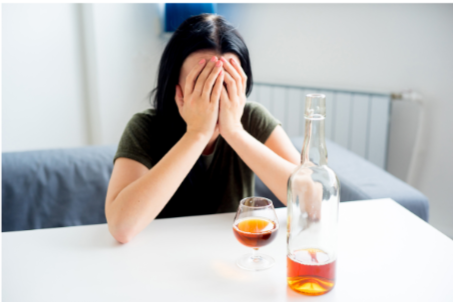
Alcohol and Relationships: The Invisible Ripple Effect
One of the most common reasons people begin to question their drinking is not just how it feels internally, but how it impacts their relationships.
It doesn’t always show up in dramatic ways. More often, it appears in quieter patterns:
Feeling more distant after drinking
Avoiding conversations that feel uncomfortable
Misunderstandings that are harder to repair
Less emotional availability
Increased irritability, especially the next day
A subtle sense of disconnection over time
You might notice moments where alcohol gets in the way of connection.
You want to bring something up with your partner, but it feels easier to avoid it and pour a drink instead. Or you do have the conversation, but it doesn’t go the way you hoped, and later you wonder if you were fully present.
Alcohol can shift communication, not just in the moment, but in what happens after. It can make repair harder, reduce emotional range, and make it more difficult to stay present during discomfort, which is often where deeper connection is built.
This is why relationship work often focuses so much on communication and emotional presence.
Those skills become harder to access when your nervous system is used to reaching for relief instead of staying in the moment.
When Alcohol Becomes Part of Emotional Regulation
It can be helpful to think of emotional regulation as a system of tools.
Some are internal:
Naming what you feel
Grounding in your body
Shifting perspective
Some are external:
Talking to someone
Going for a walk
Journaling
Resting
Alcohol can become one of those tools, but it works differently than most. It’s fast, accessible, and changes how you feel quickly.
That immediacy is part of what makes it so reinforcing.
But alcohol doesn’t actually teach your nervous system how to move through emotion, it interrupts the process. So while it may reduce distress in the short term, it can make it harder over time to tolerate those same emotions without it.
This is often where people start to feel stuck:
It helps in the moment
It creates consequences later
It’s hard to imagine something else working as well
That tension between short-term relief and long-term impact is often where change begins.
Understanding Triggers Without Self-Judgment
When people hear the word “trigger,” it can feel clinical or judgmental. But a trigger is simply a cue that activates a response.
For you, that might look like:
The moment the workday ends
Walking into a quiet house
Tension after a conversation
Feeling socially “on” for too long
A drop in energy in the evening
And then almost automatically: “I need something to take the edge off.”
The important part is not eliminating triggers. It’s recognizing that they’re part of being human. You won’t always feel calm, regulated, or at ease, and that’s not the goal.
The goal is understanding the pathway.
For example:
Stress → “I need to shut my brain off” → alcohol → relief → emotion returns later (sometimes stronger)
Once you can see that sequence clearly, you don’t have to change everything at once. You can begin to create small moments of awareness within it.
The Role of Self-Compassion in Changing Patterns
One of the biggest barriers to change in patterns like this is shame.
The thought “I shouldn’t be doing this” often creates more discomfort, not less. And when discomfort increases, the urge to escape it can increase too.
Self-compassion isn’t about excusing behavior. It’s about understanding it without turning against yourself.
Instead of “why can’t I stop?” a more useful question might be:
“What was I feeling right before I reached for this?”
That shift from judgment to curiosity changes your relationship with yourself in the moment. It helps you focus on understanding rather than criticism, which is where meaningful change can begin.
What Change Actually Looks Like
Change in your relationship with alcohol doesn’t usually start with cutting it out completely.
It often starts much smaller than that.
You might begin to:
Notice patterns without changing them yet
Pause before automatically pouring a drink
Get curious about what you’re feeling in that moment
Experiment with other ways of coping in low-pressure situations
Pay attention to how you feel emotionally the next day
For many people, the goal isn’t abstinence. It’s choice. And choice requires awareness, not perfection, shame, or control.

If alcohol has become part of how you cope with stress, anxiety, sadness, or even boredom, it’s usually not because something is wrong with you.
It’s because something has been working, at least in the short term.
But you might start to notice that what once felt helpful now feels more complicated. That’s often the moment where change becomes possible. Not through force, but through understanding.
You might begin to ask yourself:
What is alcohol helping me avoid or soften?
When do I feel the strongest pull toward it?
What would it look like to support myself differently in those moments?
And if you find yourself feeling stuck in that space: aware of the pattern, but unsure how to shift it, you don’t have to figure it out alone.
This is the kind of work therapy is built for. Not to take something away from you, but to help you understand what’s underneath it and to build ways of coping that feel sustainable, supportive, and aligned with how you want to live.
Because the goal isn’t just to change a habit.
It’s to feel more at ease in your own mind and more connected in your relationships without needing to rely on something outside of you to get there.
If you’re struggling with drinking to cope with stress or noticing the impact of alcohol on your relationships, I’d be glad to support you. Reach out to get started.